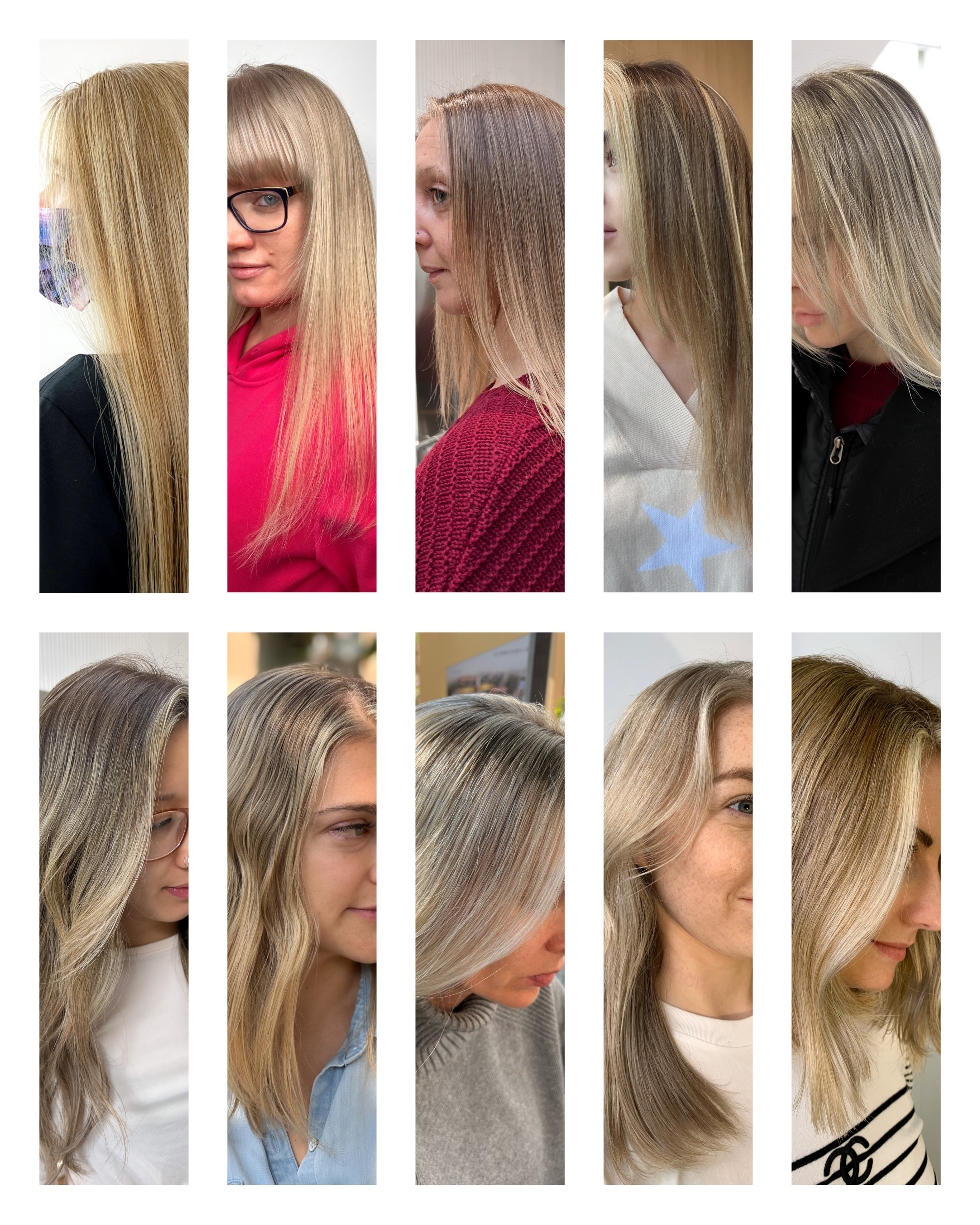
The Language of Blonde
When a client asks for a “natural blonde”, the colourist and the client may not be picturing quite the same colour. One person remembers the soft gold of childhood hair in sunlight; another means a muted beige with almost no yellow. Words such as champagne, ash and rose blonde help, but everyone brings their own visual memory to them.
That difference matters in the salon. A colourist might hear “natural” and create something pinker, warmer or cooler than the client imagined, even when the work is carefully done. Looking at several references together can help clarify what, precisely, feels right: the depth at the roots, the warmth through the lengths, the way the colour looks beside the face.
Photographs are useful for finding a shared language. They are less useful as exact instructions. Light, camera settings and the hair beneath the finished colour all change what we see.
Beyond the Formula
Blonde work often involves lightening, and this is where judgement becomes more important than a favourite formula. A colourist needs to understand what has happened to the hair before: permanent colour, previous bleach, other chemical services and the time since each one. Porosity, elasticity, existing damage and the possibility of uneven lightening all influence the approach.
There is a point beyond which pursuing more lightness is not a good decision for the hair being treated. Sometimes the better route is to keep more depth, work in stages or choose a softer target. A strand test can help when the history or condition makes the response uncertain.
A photograph sent before a visit can start the discussion, but it cannot replace a physical assessment in the salon. Strength, elasticity and every layer of previous colour cannot be reliably judged from an image alone. Hair condition and tolerance need to be assessed individually, never assumed from someone's nationality.
The question is not simply how light the hair can go. It is what kind of blonde can live well on this particular head of hair.
What Real Corrections Reveal
Warmth can appear similar in photographs while the histories beneath it are very different. In one documented brassy blonde correction, patchy orange-gold sections and an uneven transition called for a staged approach across two appointments. Another client in that same case study wanted medium beige blonde; adding beige-brown colour, toner and a repair treatment answered her goal without simply chasing more lightness.
The vanilla blonde balayage case began somewhere else: previously lightened hair with six months of regrowth. There, the aim was to reconnect the darker base and lighter lengths while making future growth feel softer. The visible result may still be called blonde, but the route follows a different history and a different idea of maintenance.
These are cases from my own work, but the principle extends beyond them. Similar-looking colour problems do not necessarily have the same cause or require the same solution. The starting point matters just as much as the desired shade.
Choosing a Colourist in Guangzhou
If you are looking for a colourist in Guangzhou for the first time, a conversation can tell you more than a price list alone. Can the colourist explain how they understand your reference images? Do their previous examples show work relevant to your starting colour and your preferred tone?
A thorough consultation should also cover previous chemical treatments, what may take more than one visit, and how the colour will grow out. A clear plan should include the likely scope, maintenance and investment. The price guidance on this site provides service ranges; an individual estimate still depends on the hair and the route.
The best blonde is not necessarily the lightest or the one closest to a picture. It is the colour that feels like yours, with a process and a level of upkeep you understand.